http://articles.mercola.c...
Californians can view this documentary and learn about GMOs and the intimidation Monsanto is wielding over farmers before voting (YES hopefully) on Prop 37.Dr. Joseph Mercola is being attacked and smeared in negative ad mailers, but he posted the documentary link so people can view it for free before that privilege expires on November 10, 2012.
Percy Schmeiser, a feisty and savvy farmer, battled with Monsanto. In the process he has brought to light not only Monsanto’s attempt to control the food supply, but the pitfalls of any company being allowed to have the right to put a patent on higher life forms including birds, fish and human beings.
29:40 minutes in, Percy explains the damage seen from GMOs. He says GMOs are not based on proven science. “We do not want any more GMOs.”… “The corporations want total control of the seed supply which will then give them total control of the food supply. That’s what GMOs are all about; not more food to feed a hungry world but control of the seed supply.”
The second half of the documentary addresses the quality, technology and science associated with GMOs.
http://www.percyschmeiser.com/Ar...
Showing posts with label farming. Show all posts
Showing posts with label farming. Show all posts
Saturday, November 3, 2012
Sunday, October 7, 2012
The Great Organic Deceivers
August 21, 2012
anh-usa.org
Which organic brands really believe in organic—and which are working behind the scenes to betray natural health consumers?
 Many
natural and organic brands are actually owned by huge conglomerates
that don’t support sustainable, organic, non-GMO, non-toxic agriculture.
In fact, their product labels are often designed to mislead consumers
just so they can grab a share of the lucrative health-conscious consumer
market.
Many
natural and organic brands are actually owned by huge conglomerates
that don’t support sustainable, organic, non-GMO, non-toxic agriculture.
In fact, their product labels are often designed to mislead consumers
just so they can grab a share of the lucrative health-conscious consumer
market.
Even worse, many of the conglomerate companies that produce so-called natural foods—and even some labeled “organic”—are allied with the biotech industry fighting by any means to defeat “Label GMO,” a.k.a. Prop 37, the California Right to Know 2012 Ballot Initiative. Why are they doing such a thing? Because they sell more food that has GMO ingredients than organic food, and don’t want consumers to have a choice about the GMO. They especially don’t want consumers to know what is actually in their so-called “natural” products.
Keep in mind that the term “natural” has no legal or regulatory meaning at all: FDA has never created a definition for it and claims that “it is difficult to define a food product that is ‘natural’ because the food has probably been processed and is no longer the product of the earth.” In fact, FDA even says high-fructose corn syrup is natural! “Natural” is nothing more than a marketing term, one that is in fact meaningless.
You’d think a “natural” food wouldn’t have genetically engineered ingredients, but you’d be wrong. Kashi, which everywhere proclaims its passion for “healthy, all-natural foods,” has GMO soy in its ingredients. Kashi is owned by Kellogg, the multinational food manufacturing company that produces everything from sugary cereals to Morningstar Farms vegetarian products (some of which are organic but still use GMOs) to Keebler cookies (filled with GMOs). The company has contributed $612,000 to defeat Prop 37 and keep GMO labels off their products.
Sierra Mist Natural wears that moniker proudly because their soda is “made with real sugar and 100% natural flavors”! The brand is owned by PepsiCo, which has contributed more than $1 million to defeat Prop 37.
What you may not realize is that many organic brands have been snapped up by Big Food companies; their ownership is deliberately hidden from consumers. While they purport to have an environmental and health-conscious mission, they completely undercut that claim by fighting GMO labeling. Honest Tea, for example, is USDA-certified organic. Yet Honest Tea is owned by Coca-Cola, which has also contributed more than $1 million to defeat Label GMO. We don’t think that’s very honest. Coke also owns Odwalla, which produces “all-natural juices” and “nourishing protein bars,” and supposedly supports sustainable agriculture. GMO is sustainable agriculture?
Silk carries the “Non-GMO Project Verified” seal on its soy milk, coconut milk, and almond milk products. Both Silk and the Horizon Organic brand tell their customers that the brands oppose GMOs. Yet both are owned by Dean Foods, which has contributed $253,000 to defeat Label GMO. (CONTINUE READING)
anh-usa.org
 Many
natural and organic brands are actually owned by huge conglomerates
that don’t support sustainable, organic, non-GMO, non-toxic agriculture.
In fact, their product labels are often designed to mislead consumers
just so they can grab a share of the lucrative health-conscious consumer
market.
Many
natural and organic brands are actually owned by huge conglomerates
that don’t support sustainable, organic, non-GMO, non-toxic agriculture.
In fact, their product labels are often designed to mislead consumers
just so they can grab a share of the lucrative health-conscious consumer
market.Even worse, many of the conglomerate companies that produce so-called natural foods—and even some labeled “organic”—are allied with the biotech industry fighting by any means to defeat “Label GMO,” a.k.a. Prop 37, the California Right to Know 2012 Ballot Initiative. Why are they doing such a thing? Because they sell more food that has GMO ingredients than organic food, and don’t want consumers to have a choice about the GMO. They especially don’t want consumers to know what is actually in their so-called “natural” products.
Keep in mind that the term “natural” has no legal or regulatory meaning at all: FDA has never created a definition for it and claims that “it is difficult to define a food product that is ‘natural’ because the food has probably been processed and is no longer the product of the earth.” In fact, FDA even says high-fructose corn syrup is natural! “Natural” is nothing more than a marketing term, one that is in fact meaningless.
You’d think a “natural” food wouldn’t have genetically engineered ingredients, but you’d be wrong. Kashi, which everywhere proclaims its passion for “healthy, all-natural foods,” has GMO soy in its ingredients. Kashi is owned by Kellogg, the multinational food manufacturing company that produces everything from sugary cereals to Morningstar Farms vegetarian products (some of which are organic but still use GMOs) to Keebler cookies (filled with GMOs). The company has contributed $612,000 to defeat Prop 37 and keep GMO labels off their products.
Sierra Mist Natural wears that moniker proudly because their soda is “made with real sugar and 100% natural flavors”! The brand is owned by PepsiCo, which has contributed more than $1 million to defeat Prop 37.
What you may not realize is that many organic brands have been snapped up by Big Food companies; their ownership is deliberately hidden from consumers. While they purport to have an environmental and health-conscious mission, they completely undercut that claim by fighting GMO labeling. Honest Tea, for example, is USDA-certified organic. Yet Honest Tea is owned by Coca-Cola, which has also contributed more than $1 million to defeat Label GMO. We don’t think that’s very honest. Coke also owns Odwalla, which produces “all-natural juices” and “nourishing protein bars,” and supposedly supports sustainable agriculture. GMO is sustainable agriculture?
Silk carries the “Non-GMO Project Verified” seal on its soy milk, coconut milk, and almond milk products. Both Silk and the Horizon Organic brand tell their customers that the brands oppose GMOs. Yet both are owned by Dean Foods, which has contributed $253,000 to defeat Label GMO. (CONTINUE READING)


Sunday, June 10, 2012
Hemp legalization added to Senate farm bill
By Stephen C. Webster
Thursday, June 7
In a last minute addition to the Agriculture Reform, Food and Jobs Act of 2012, Sen. Ron Wyden (D-OR) has submitted an amendment that would legalize the production of industrial hemp, a potential new bumper crop for U.S. farmers.
 “Industrial hemp is used in many healthy and sustainable consumer
products. However, the federal prohibition on growing industrial hemp
has forced companies to needlessly import raw materials from other
countries,” Wyden said in prepared text. “My amendment to the Farm Bill
will change federal policy to allow U.S. farmers to produce hemp for
these safe and legitimate products right here, helping both producers
and suppliers to grow and improve Oregon’s economy in the process.”
“Industrial hemp is used in many healthy and sustainable consumer
products. However, the federal prohibition on growing industrial hemp
has forced companies to needlessly import raw materials from other
countries,” Wyden said in prepared text. “My amendment to the Farm Bill
will change federal policy to allow U.S. farmers to produce hemp for
these safe and legitimate products right here, helping both producers
and suppliers to grow and improve Oregon’s economy in the process.”
Allowing American farmers to produce industrial hemp, which is different from its more notorious cousin marijuana, would yield significant and immediate profits the first year, according to an analysis conducted in 1998 (PDF) by the Center for Business and Economic Research at the University of Kentucky. (CONTINUE READING)
Thursday, June 7
In a last minute addition to the Agriculture Reform, Food and Jobs Act of 2012, Sen. Ron Wyden (D-OR) has submitted an amendment that would legalize the production of industrial hemp, a potential new bumper crop for U.S. farmers.
 “Industrial hemp is used in many healthy and sustainable consumer
products. However, the federal prohibition on growing industrial hemp
has forced companies to needlessly import raw materials from other
countries,” Wyden said in prepared text. “My amendment to the Farm Bill
will change federal policy to allow U.S. farmers to produce hemp for
these safe and legitimate products right here, helping both producers
and suppliers to grow and improve Oregon’s economy in the process.”
“Industrial hemp is used in many healthy and sustainable consumer
products. However, the federal prohibition on growing industrial hemp
has forced companies to needlessly import raw materials from other
countries,” Wyden said in prepared text. “My amendment to the Farm Bill
will change federal policy to allow U.S. farmers to produce hemp for
these safe and legitimate products right here, helping both producers
and suppliers to grow and improve Oregon’s economy in the process.”Allowing American farmers to produce industrial hemp, which is different from its more notorious cousin marijuana, would yield significant and immediate profits the first year, according to an analysis conducted in 1998 (PDF) by the Center for Business and Economic Research at the University of Kentucky. (CONTINUE READING)
Monday, February 27, 2012
Harvard study: Pasteurized milk from industrial dairies linked to cancer
 Jonathan Benson
Natural News
Monday, February 27, 2012
The truth has once again shaken the foundation of the ‘American Tower of Babel’ that is mainstream science, with a new study out of Harvard University showing that pasteurized milk product from factory farms is linked to causing hormone-dependent cancers. It turns out that the concentrated animal feeding operations (CAFO) model of raising cows on factory farms churns out milk with dangerously high levels of estrone sulfate, an estrogen compound linked to testicular, prostate, and breast cancers.
Evaluating data from all over the world, Dr. Davaasambuu and her colleagues identified a clear link between consumption of such high-hormone milk, and high rates of hormone-dependent cancers. In other words, contrary to what theU.S. Centers for Disease Control and Prevention(CDC), theU.S. Department of Agriculture(USDA), and the conventional milk lobby would have you believe, processed milk from factory farms is not a health product, and is directly implicated in causing cancer.
“The milk we drink today is quite unlike the milk our ancestors were drinking” without apparent harm for 2,000 years, Dr. Davaasambuu is quoted as saying in theHarvard University Gazette. “The milk we drink today may not be nature’s perfect food.”
Meanwhile, raw, grass-fed, organic milk from cows milked at the proper times is linked to improving digestion, healing autoimmune disorders, and boosting overall immunity, which can help prevent cancer. Though you will never hear any of this from the mainstream media, all milk is not the same — the way a cow is raised, when it is milked, and how its milk is handled and processed makes all the difference in whether or not the end product promotes health or death.
American government seeks to further perpetuate the lie that all milk is the same with egregious new provisions in 2012 Farm Bill
Of particular concern are new provisions in the 2012 Farm Bill that create even more incentives for farmers to produce the lowest quality, and most health-destroying, type of milk possible. Rather than incentivize grazing cows on pastures, which allows them to feed on grass, a native food that their systems can process, the government would rather incentivize confined factory farming methods that force cows to eat genetically-modified (GM) corn and other feed, which makes them sick. (CONTINUE READING)
Monday, November 21, 2011
Solid Proof That Weather Modification Projects Are Being Conducted All Over The United States
The American Dream
 Monday, November 21, 2011
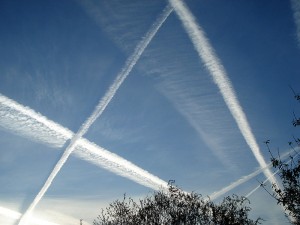
Most Americans still believe that our weather patterns are 100% natural and that our government has absolutely no control over the weather. Unfortunately, that is not the case at all. What you are about to read is evidence that weather modification is happening right now all over the United States.
This is never acknowledged by our politicians and it is never talked
about by the mainstream media. But it is very, very real. Weather
modification programs in some parts of the country have been going on
for many years and evidence of these programs is hidden in plain view.
So does this mean that if we don’t like the weather we can just blame
the government? Well, yes it does, but it also means that the
government has been seriously messing around with our environment and
there could be “unintended consequences” that are far more dramatic than
any of us ever dared to imagine.
Those that believed that the government was involved in weather modification were once considered to be “kooks”, but the truth is that authorities aren’t even trying to hide it anymore. For example, the following was recently posted in the “Legal Notices” section of the classified ads in a local newspaper called The Tribune in San Luis Obispo, California….
 Monday, November 21, 2011
Most Americans still believe that our weather patterns are 100% natural and that our government has absolutely no control over the weather. Unfortunately, that is not the case at all. What you are about to read is evidence that weather modification is happening right now all over the United States.
Those that believed that the government was involved in weather modification were once considered to be “kooks”, but the truth is that authorities aren’t even trying to hide it anymore. For example, the following was recently posted in the “Legal Notices” section of the classified ads in a local newspaper called The Tribune in San Luis Obispo, California….
NOTICE OF INTENTION WEATHER MODIFICATION PROGRAM THE SANTA BARBARA COUNTY WATER AGENCY HEREBY GIVES NOTICE OF INTENTION TO CONDUCT A WEATHER MODIFICATION PROGRAM NATURE AND PURPOSE: The purpose of the project is to increase rainfall to help alleviate deficiencies of water supplies in Santa Barbara County. Clouds would be seeded by the dispersal of Silver Iodide (AgI). Two possible modes of seeding, air based and ground based, would be used. LOCATION OF PURPOSE: Project operations could be conducted during the period between November 15 and April 15, for each year, 2011-2012 through 2015-2016. Airborne seeding operations would utilize air space over Santa Barbara County, portions of San Luis Obispo County as well as the Pacific Ocean immediately west of Santa Barbara and San Luis Obispo Counties. Ground based seeding operations would be conducted from the Santa Ynez Mountains, the Casmalia Hills and the San Rafael Mountains. The target areas for seeding operations are the watersheds behind Cachuma and Gibraltar reservoirs on the Santa Ynez River as well as Twitchell reservoir on the Cuyama River. LICENSEE: The project would be operated and supervised by a licensed weather modification consultant.Can it get much clearer than that? (CONTINUE READING)
Wednesday, September 21, 2011
What happened in Freetopia? A video fable about what went wrong with America
The story of Freetopia, written and narrated by Mike Adams from naturalnews.com
Thursday, July 28, 2011
Organic farmers sue Monsanto
 Organic farmers sue Monsanto
Organic farmers are taking on corporate America.
Nearly 300,000 organic farmers are filing suit against corporate agriculture giant Monsanto, who have in recent years squashed independent organic farms from coast to coast.
270,000 organic farmers filed a lawsuit in March 30 in an attempt to keep a portion of the world’s food supply organic. The plaintiffs in the case are members of around 60 family farms, seed businesses and organic agricultural organizations.
Led by the Organic Seed Growers and Trade Association, the suit lashes out at Monsanto to keep their engineered Genuity® Roundup Ready® canola seed out of their farms. Organic agriculturalists say that corn, cotton, sugar beets and other crops of theirs have been contaminated by Monsanto‘s seed, and even though the contamination has been largely natural and unintended, Monsanto has been suing hundreds of farmers for infringing on their patent for incidentally using their product.
Not only are organic farmers trying to keep things — well, organic — but now many of them are being forced to throw in the towel as Monsanto unfortunately continues a successful war on the competition by suing indie growers that run organic farms. In recent years, Monsanto has acquired more than 20 of the biggest seed producers and sellers in the country, and The Street reports that they have instituted a policy whereas their customers are forced to use their bionengineered seeds — and purchase them each and every year — lest they want to be blacklisted forever. (CONTINUE READING)
Wednesday, July 27, 2011
Consolidation of seed companies leading to corporate domination of world food supply

But today everything has changed, as large chemical and agribusiness firms have acquired or merged with seed companies and other agricultural input companies. They have successfully gained a foothold on genetically-modified (GM) crops with transgenic traits.
These primary factors and several others have facilitated a crescendo towards the global domination of agriculture by corporations, and thus the world's food supply.
The dismal state in which we find ourselves today did not come overnight, of course, but it did pick up rapid speed after the introduction of GM crops in the mid-1990s. Since that time, multinational corporations like Monsanto, DuPont, and Syngenta have seized a significant amount of control over the global seed industry, which has greatly limited agricultural diversity and freedom.
The ability to patent both seeds and seed traits has also added injury to insult, as the ability to obtain natural or heirloom seeds is becoming increasingly difficult, and many farmers feel they have no choice but to go with the flow.
Professor Philip H. Howard from the Department of Community, Agriculture, Recreation and Resource Studies at Michigan State University published a study in 2009 entitled Visualizing Consolidation in the Global Seed Industry: 1996 - 2008 that analyzes the trend in agriculture towards corporate dominance.
The report, which was featured in a special issue of the journal Renewable Agriculture, provides both an extensive data analysis of agriculture's dramatic transformation over the past several decades, as well as a highly-informative visual analysis of this truly shocking hostile takeover situation.
The 'Big Six" pharmaceutical and chemical companies have acquired, created joint ventures with hundreds of seed companies over the past 15 years
In order to help assist his readers in understanding the state of the seed industry, Prof. Howard developed a very informative graphic that displays the reality of who really controls the seed industry.Monsanto, DuPont, Syngenta, Bayer, Dow, and BASF collectively own or partially-own hundreds of formerly-independent seed companies -- and Monsanto, of course, dominates them all.
You can view the graphic for yourself at the following link:
http://www.naturalnews.com/files/se...
As you will see, the blue circles in the diagram represent seed companies, while the red circles -- which happen to all be chemical or pharmaceutical companies -- control the vast majority of them. Solid gray arrows indicate complete ownership of a company, while gray lines indicate partial ownership.
One of the most obvious first impressions to be gathered from the diagram is Monsanto's excessive and widespread control over the seed industry. According to Prof. Howard's analysis, Monsanto acquired more than 50 seed companies just during the time represented by his study period, which spans the years between 1996 and 2008.
Monsanto had little-to-no involvement in the seed industry prior to the mid-1980s, but since that time has been rapidly eating up seed companies and furthering its development and control over the food supply through GMOs. Today, Monsanto is the world's largest seed company, and the transnational behemoth continues to acquire or otherwise create "partnerships" with various independent seed companies that are still in existence.
Behind Monsanto, the other five of the "Big Six" that Prof. Howard illustrates -- DuPont, Syngenta, Bayer, Dow, and BASF -- collectively own or control a great portion of the remaining major seed companies not owned or controlled by Monsanto. And one of the biggest factors that has contributed to this dismal setup is GMOs and transgenic, patentable seed traits that are shared among the industry players.
The "Big Six" each have agreements with one or more of the others; their overall success has largely hinged on GMOs and increased control of agricultural inputs
The only thing worse than Monsanto and the dominance of the seed market are the cozy relationships with one another. Prof. Howard's analysis reveals that every company in the "Big Six" has at least one mutual relationship with one another, and they together share corporate control of the seed industry. (CONTINUE READING)
Monday, July 25, 2011
6 Ways Food is Being Used as a Weapon
Activist Post
July 25, 2011
Hungry people will do anything for food, which means that those who have control over food can use it as leverage.
In 1974, Henry Kissinger suggested using food as a weapon to induce targeted population reduction in a previously classified 200-page report, National Security Study Memorandum 200: Implications of Worldwide Population Growth for U.S. Security and Overseas Interests.
The primary tactic to be applied is that food aid would be withheld
from developing nations until they submitted to birth control policies:
Here are six ways food is being used to wage war against the population:
1. Food inflation: Crippling food inflation is now affecting every corner of the world with the poorest feeling the worst pangs. The U.N. Food and Agriculture Organization's (FAO) food price index increased by 3 points to 234 points in June – a 39% increase on the year. These increases are causing mass starvation and rioting in many poor regions of the world, but they are also beginning to punish the middle-class in the Industrialized nations. The price of food is inflating primarily because of a devalued commodity-dollar from excessive money printing and Wall Street commodity speculation. Perhaps it's more appropriate to call it commodity manipulation, not speculation. As William Engdahl recently pointed out: "The ability to manipulate the price of essential foods worldwide at will -- almost irrespective of today’s physical supply and demand for grains -- is quite recent....Up until the grain crisis of the mid-1970s there was no single 'world price' for grain, the benchmark for the price of all foods and food products."
What fuels commodity speculation is not just the obvious decline of the dollar and a flight to something tangible, but also genuine supply concerns based on a variety of factors that cause crop shortages like extreme weather or disease. Regardless of real or manipulated food shortages, food prices will continue to rise because of increased demand and an incrementally weaker dollar. Luckily, there are many ways to protect yourself from food inflation and the food war in general.
(CONTINUE READING)
July 25, 2011
Hungry people will do anything for food, which means that those who have control over food can use it as leverage.
 |
| Dees Illustration |
There is also some established precedent for taking account of family planning performance in appraisal of assistance requirements by AID [U.S. Agency for International Development] and consultative groups. Since population growth is a major determinant of increases in food demand, allocation of scarce PL 480 resources should take account of what steps a country is taking in population control as well as food production. In these sensitive relations, however, it is important in style as well as substance to avoid the appearance of coercion.So, food was to be used as just another method of imperial colonization to force countries to conform their policies to those desired by the controllers. Notably, this tactic only works as a blunt weapon on territories enduring a severe economic collapse and with little resources for food production. Today, however, it appears that the entire globe is receiving an arsenal of food bombs as there appears to be a multifaceted attack on people’s access to food. In other words, what has been an admitted tactic for nearly 40 years of controlling food aid for regional population reduction has now grown more complex and expansive. Because of massive corporate consolidation of agriculture, centrally coordinated global regulations, a devalued commodity-dollar and unrestrained commodity speculation, chemical and genetic modification, and real or manipulated food shortages; there is indeed a war being waged -- with food as the primary weapon. Understand, this is a not purely a war on food, but rather a war on the general population. Therefore, it is crucial to understand these tactics in order to defend against them.
Here are six ways food is being used to wage war against the population:
1. Food inflation: Crippling food inflation is now affecting every corner of the world with the poorest feeling the worst pangs. The U.N. Food and Agriculture Organization's (FAO) food price index increased by 3 points to 234 points in June – a 39% increase on the year. These increases are causing mass starvation and rioting in many poor regions of the world, but they are also beginning to punish the middle-class in the Industrialized nations. The price of food is inflating primarily because of a devalued commodity-dollar from excessive money printing and Wall Street commodity speculation. Perhaps it's more appropriate to call it commodity manipulation, not speculation. As William Engdahl recently pointed out: "The ability to manipulate the price of essential foods worldwide at will -- almost irrespective of today’s physical supply and demand for grains -- is quite recent....Up until the grain crisis of the mid-1970s there was no single 'world price' for grain, the benchmark for the price of all foods and food products."
What fuels commodity speculation is not just the obvious decline of the dollar and a flight to something tangible, but also genuine supply concerns based on a variety of factors that cause crop shortages like extreme weather or disease. Regardless of real or manipulated food shortages, food prices will continue to rise because of increased demand and an incrementally weaker dollar. Luckily, there are many ways to protect yourself from food inflation and the food war in general.
(CONTINUE READING)
Wednesday, July 20, 2011
The Green Agenda
green-agenda.com
We should all want to be wise and careful stewards of the beautiful planet we call home. But most of us realise that humans in general are not being good stewards. We are wasteful with our natural resources and have reduced biodiversity. Therefore, when we read about groups and organisations calling for a 'green revolution' and a new relationship between humanity and nature it is easy to agree with their ideas.
However, certain aspects of the modern green movement that is permeating every segment of our society are not about protecting the environment. You don’t have to dig very deep to discover the true beliefs of the influential leaders who are using genuine concerns about the environment to promote an agenda of fear and control. Please carefully consider the implications of the opinions that they so openly and freely express:
(references and sources for the quotes below can be found here)
"The common enemy of humanity is man.
In searching for a new enemy to unite us, we came up
with the idea that pollution, the threat of global warming,
water shortages, famine and the like would fit the bill. All these
dangers are caused by human intervention, and it is only through
changed attitudes and behavior that they can be overcome.
The real enemy then, is humanity itself."
- Club of Rome,
premier environmental think-tank,
consultants to the United Nations
~~~~~~~~~~~~~~~~~~~~~~~~~~~~~~~~~~~~~~~~~~~~~~~
"We need to get some broad based support,
to capture the public's imagination...
So we have to offer up scary scenarios,
make simplified, dramatic statements
and make little mention of any doubts...
Each of us has to decide what the right balance
is between being effective and being honest."
- Prof. Stephen Schneider,
Stanford Professor of Climatology,
lead author of many IPCC reports
~~~~~~~~~~~~~~~~~~~~~~~~~~~~~~~~~~~~~~~~~~~~~~~
"We've got to ride this global warming issue.
Even if the theory of global warming is wrong,
we will be doing the right thing in terms of
economic and environmental policy."
- Timothy Wirth,
President of the UN Foundation ~~~~~~~~~~~~~~~~~~~~~~~~~~~~~~~~~~~~~~~~~~~~~~~
"No matter if the science of global warming is all phony...
climate change provides the greatest opportunity to
bring about justice and equality in the world."
- Christine Stewart,
former Canadian Minister of the Environment~~~~~~~~~~~~~~~~~~~~~~~~~~~~~~~~~~~~~~~~~~~~~~~
“The data doesn't matter. We're not basing our recommendations
on the data. We're basing them on the climate models.”
- Prof. Chris Folland,
Hadley Centre for Climate Prediction and Research~~~~~~~~~~~~~~~~~~~~~~~~~~~~~~~~~~~~~~~~~~~~~~~
“The models are convenient fictions
that provide something very useful.”
- Dr David Frame,
climate modeler, Oxford University
~~~~~~~~~~~~~~~~~~~~~~~~~~~~~~~~~~~~~~~~~~~~~~~"I believe it is appropriate to have an 'over-representation' of the facts
on how dangerous it is, as a predicate for opening up the audience."
- Al Gore,
Climate Change activist
~~~~~~~~~~~~~~~~~~~~~~~~~~~~~~~~~~~~~~~~~~~~~~~
"It doesn't matter what is true,
it only matters what people believe is true."
- Paul Watson,
co-founder of Greenpeace
~~~~~~~~~~~~~~~~~~~~~~~~~~~~~~~~~~~~~~~~~~~~~~~
(CONTINUE READING QUOTES)
http://green-agenda.com/
We should all want to be wise and careful stewards of the beautiful planet we call home. But most of us realise that humans in general are not being good stewards. We are wasteful with our natural resources and have reduced biodiversity. Therefore, when we read about groups and organisations calling for a 'green revolution' and a new relationship between humanity and nature it is easy to agree with their ideas.
However, certain aspects of the modern green movement that is permeating every segment of our society are not about protecting the environment. You don’t have to dig very deep to discover the true beliefs of the influential leaders who are using genuine concerns about the environment to promote an agenda of fear and control. Please carefully consider the implications of the opinions that they so openly and freely express:
(references and sources for the quotes below can be found here)
"The common enemy of humanity is man.
In searching for a new enemy to unite us, we came up
with the idea that pollution, the threat of global warming,
water shortages, famine and the like would fit the bill. All these
dangers are caused by human intervention, and it is only through
changed attitudes and behavior that they can be overcome.
The real enemy then, is humanity itself."
- Club of Rome,
premier environmental think-tank,
consultants to the United Nations
~~~~~~~~~~~~~~~~~~~~~~~~~~~~~~~~~~~~~~~~~~~~~~~
"We need to get some broad based support,
to capture the public's imagination...
So we have to offer up scary scenarios,
make simplified, dramatic statements
and make little mention of any doubts...
Each of us has to decide what the right balance
is between being effective and being honest."
- Prof. Stephen Schneider,
Stanford Professor of Climatology,
lead author of many IPCC reports
~~~~~~~~~~~~~~~~~~~~~~~~~~~~~~~~~~~~~~~~~~~~~~~
"We've got to ride this global warming issue.
Even if the theory of global warming is wrong,
we will be doing the right thing in terms of
economic and environmental policy."
- Timothy Wirth,
President of the UN Foundation ~~~~~~~~~~~~~~~~~~~~~~~~~~~~~~~~~~~~~~~~~~~~~~~
"No matter if the science of global warming is all phony...
climate change provides the greatest opportunity to
bring about justice and equality in the world."
- Christine Stewart,
former Canadian Minister of the Environment~~~~~~~~~~~~~~~~~~~~~~~~~~~~~~~~~~~~~~~~~~~~~~~
“The data doesn't matter. We're not basing our recommendations
on the data. We're basing them on the climate models.”
- Prof. Chris Folland,
Hadley Centre for Climate Prediction and Research~~~~~~~~~~~~~~~~~~~~~~~~~~~~~~~~~~~~~~~~~~~~~~~
“The models are convenient fictions
that provide something very useful.”
- Dr David Frame,
climate modeler, Oxford University
~~~~~~~~~~~~~~~~~~~~~~~~~~~~~~~~~~~~~~~~~~~~~~~"I believe it is appropriate to have an 'over-representation' of the facts
on how dangerous it is, as a predicate for opening up the audience."
- Al Gore,
Climate Change activist
~~~~~~~~~~~~~~~~~~~~~~~~~~~~~~~~~~~~~~~~~~~~~~~
"It doesn't matter what is true,
it only matters what people believe is true."
- Paul Watson,
co-founder of Greenpeace
~~~~~~~~~~~~~~~~~~~~~~~~~~~~~~~~~~~~~~~~~~~~~~~
(CONTINUE READING QUOTES)
http://green-agenda.com/
Sunday, July 17, 2011
USDA trying to run organic leafy green growers out of business
 Sunday, July 17, 2011 by: Ethan A. Huff, staff writer
(NaturalNews) Results of the passage of S. 510, the FDA Food Safety Modernization Act, are beginning to come into play -- and in this case the US Department of Agriculture (USDA), rather than the FDA, has decided to take the helm.
A recent Action Alert posted by the Cornucopia Institute (CI) warns that current efforts by handlers and marketers of green leafy vegetables are attempting to formulate one-size-fits-all "food safety" standards for the entire industry that threaten to put small, organic growers at a competitive and economic disadvantage. They may even put small, family-scale growers out of business.
NaturalNews and many other news sources put out repeated warnings last year about the ill intentions of S. 510, including that the small growers would be uprooted by its provisions if it passed (http://www.naturalnews.com/S_510.html).
Now that it has, we are beginning to see the consequences of this bill come into play. Difficult guidelines for all growers, are being proposed.
According to the alert, corporate agribusiness is attempting to form a "National Leafy Greens Marketing Agreement" with the USDA that will allegedly set standards to help prevent contamination and disease outbreaks. But as many NaturalNews readers already know, leafy greens are not dangerous. It is large-scale factory animal farms that pollute air and water that are mostly to blame. (CONTINUE READING)
Monday, April 18, 2011
Sunday, March 6, 2011
Locavorism: A Passing Trend or Lasting Benefit?
 By David Kretzmann February 28th, 2011
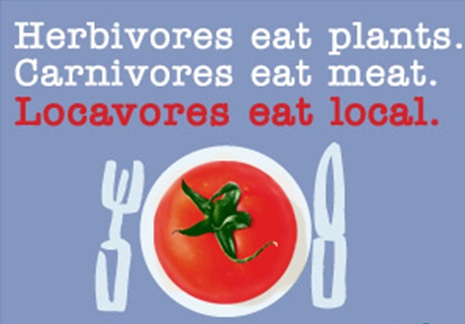
 Personally, I find “locavore” to be a limiting term. From my experience growing up in Nevada City, California, many people are interested in localizing their lives far beyond the food they eat. In lieu of the volatility and inconsistency of the U.S. economy, people are attempting to regain control over their finances and banks by joining institutions such as credit unions, which promise more local control and input compared to national corporate banks. It is possible that my perspective is slightly biased having grown up in an area with very independent individuals who seem to constantly investigate new possibilities of engaging in transactions with others. However, it is apparent that more businesses and institutions are succeeding based on their commitment to local ownership and transactions. Daniel F. Agan Jr., President of the Massachusetts Credit Union League, recently explained, “Credit union growth is being fueled by their commitment to the local community.” [i]
Despite the passion and claims of some, I do not believe the locavore or local movement in general will expand primarily because of environmental concerns. People’s environmental concern will play a role in it, but I have my doubts that environmentalism alone will lead to a sustainable route of localism. People have different ideas of what constitutes environmental sustainability and how to achieve those goals. Very few would state that the heart of the environmental movement comes down to the food that we choose to eat. Locavorism can play a major part in environmental awareness and concern, but environmental issues stretch beyond whether we buy our food from the farmer down the street or from farmers in South America. In other words, you are likely some form of an environmentalist if you are a locavore, but you do not have to be a locavore to be an environmentalist. Locavores will limit the potential of local food expansion if they publicize the movement largely on environmental grounds, because there are numerous other environmental movements competing for attention and support from the very same crowd.
Economic influences and preferences drive individual decisions more than anything else. People vote with their dollars and naturally support businesses and systems they value over other current options. For example, just because Wal-Mart offers the cheapest produce doesn’t mean that people won’t support a local farmer for a few extra dollars; if it is fresh, locally grown produce people value, they are probably willing to dish out some extra cash if necessary. Every action comes down to the personal value people place on something. This is what the movement of locavorism must publicize if they want to send a sustainable and lasting message to people. Preserving the environment is great, but if locavores can show people that they can preserve the environment and maybe save a few bucks by supporting local agriculture, the movement will have a much higher likelihood of sticking around for the long haul. If you don’t appeal to the economic interests of people, your movement will have a very difficult time sticking. (CONTINUE READING)
Wednesday, February 9, 2011
Industrial Farming: Immorality, Subsidized
 By David Kretzmann Feb 7th, 2011
As a lifelong vegetarian, no style of meat production is particularly appealing or justifiable to me. However, despite my herbivore bias, I still see an ethical dilemma present in current industrial meat facilities. Little respect is given to the conditions and treatment of the animals in industrial facilities. Animals rarely see the light of day for any substantial amount of time and they are raised on concrete floors; they are treated as mere products without regard for their status as living, breathing beings. The greatest crime, however, is that industrial facilities survive purely out of price floors, legal code, and other direct government subsidies that hinder competition from natural, local food systems.
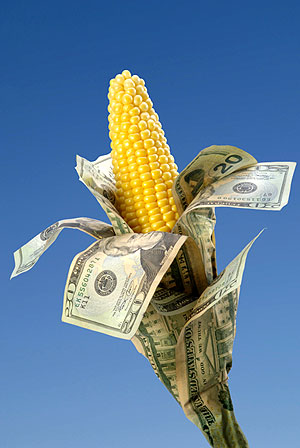
A superior product in the marketplace should not require extra help from a government agency, whether it be in the form of a price guarantee for corn (the main substance fed to livestock in industrial facilities), legal code that mandates industrial farming (or heavily restricts other methods of non-industrial farming), or other government subsidies. The fact that industrial livestock facilities rely on government assistance for survival is a testament to their flawed, unnecessary, and undesirable business practices. (If they don’t require government assistance for survival, why continue providing subsidies and other competitive advantages to these corporate industrial livestock giants?) If people prefer to purchase industrial livestock meat over locally grown free range meat, there is no need for subsidies or other governmental involvement. Clearly, subsidies are needed only when a corporation or industry (such as industrial livestock producers) offers a lousy product that people won’t normally desire.
Government subsidies merely provide the illusion of cheap prices, which goes a long way in distorting the prices and actions of people in the marketplace. The fact that industrial meat is the cheapest does not mean it’s a better product or business model, particularly when you account for the government assistance needed to lower the price in the first place. Of course, it is us, the taxpayers, who are providing the subsidies, so the cost we pay for “cheap” food at the grocery store isn’t actually very cheap. We pay taxes to provide farm and grain subsidies, fund the bureaucracies who regulate and administer fines to farmers who don’t cooperate with the industrial system, among other taxpayer-funded programs.
Society is not bearing the cost of water pollution, of antibiotic resistance, of food-borne illnesses, of crop subsidies, of subsidized oil and water- of all the hidden costs to the environment and the taxpayer that make cheap food seem cheap. No thinking person will tell you they don’t care about all that. I tell them the choice is simple: You can buy honestly priced food or you can buy irresponsibly priced food. – Joel Salatin [i]Clearly the industrial food system has government tilted in its favor; its products are cheap not because of their superior taste or flavor, but because they have managed to successfully crawl into bed with government to dismantle other legitimately competitive businesses. The philosophy of the industrial food system can be summed up in this statement: if people won’t buy your lousy, nauseating product, lobby government for subsidies and other protectionist interventions to dismantle competitors who actually offer a product desirable to the public. (CONTINUE READING ARTICLE)
Thursday, January 27, 2011
The Organic Elite Surrenders to Monsanto: What Now?
- By Ronnie Cummins
Organic Consumers Association, Jan 27, 2011
Straight to the Source
www.organicconsumers.org

In the wake of a 12-year battle to keep Monsanto's Genetically Engineered (GE) crops from contaminating the nation's 25,000 organic farms and ranches, America's organic consumers and producers are facing betrayal. A self-appointed cabal of the Organic Elite, spearheaded by Whole Foods Market, Organic Valley, and Stonyfield Farm, has decided it's time to surrender to Monsanto. Top executives from these companies have publicly admitted that they no longer oppose the mass commercialization of GE crops, such as Monsanto's controversial Roundup Ready alfalfa, and are prepared to sit down and cut a deal for "coexistence" with Monsanto and USDA biotech cheerleader Tom Vilsack.
In a cleverly worded, but profoundly misleading email sent to its customers last week, Whole Foods Market, while proclaiming their support for organics and "seed purity," gave the green light to USDA bureaucrats to approve the "conditional deregulation" of Monsanto's genetically engineered, herbicide-resistant alfalfa. Beyond the regulatory euphemism of "conditional deregulation," this means that WFM and their colleagues are willing to go along with the massive planting of a chemical and energy-intensive GE perennial crop, alfalfa; guaranteed to spread its mutant genes and seeds across the nation; guaranteed to contaminate the alfalfa fed to organic animals; guaranteed to lead to massive poisoning of farm workers and destruction of the essential soil food web by the toxic herbicide, Roundup; and guaranteed to produce Roundup-resistant superweeds that will require even more deadly herbicides such as 2,4 D to be sprayed on millions of acres of alfalfa across the U.S.
In exchange for allowing Monsanto's premeditated pollution of the alfalfa gene pool, WFM wants "compensation." In exchange for a new assault on farmworkers and rural communities (a recent large-scale Swedish study found that spraying Roundup doubles farm workers' and rural residents' risk of getting cancer), WFM expects the pro-biotech USDA to begin to regulate rather than cheerlead for Monsanto. In payment for a new broad spectrum attack on the soil's crucial ability to provide nutrition for food crops and to sequester dangerous greenhouse gases (recent studies show that Roundup devastates essential soil microorganisms that provide plant nutrition and sequester climate-destabilizing greenhouse gases), WFM wants the Biotech Bully of St. Louis to agree to pay "compensation" (i.e. hush money) to farmers "for any losses related to the contamination of his crop." (READ FULL ARTICLE)
Tuesday, December 28, 2010
Activist Post: 10 New Year's Re-Solutions For Non-violent Rebellion
 |
| "Be the change you wish to see in the world" - Gandhi |
The democratic political system is now clearly run by crony cartelism. The multinational banks have hijacked the economy and are openly looting the public. Mounting and impossible-to-pay off debt is crippling local governments. The entire spectrum of our rights continues to degrade. Crimes that would land regular citizens in jail are now openly being committed by the elite and their organizations with no justice. And perhaps most telling, the power structure is establishing a control grid to eliminate due process for the Internet and beyond to stifle any dissent.
Given the current situation, it can seem impossible to affect real change. However, the exact opposite is the case. The only reason the system is maintained is because the majority still acquiesce to it. However, change won't come by electing new establishment politicians, because no matter how noble they may be they still must play the corrupt game. Change won't come through violent protests or offensive cyber hacktivism, as that only invites and justifies the creeping police state. We must stop accepting and supporting the system, individually, in order to change it.
Because our representative democracy has become a fraud, and the media and courts are clearly shills for the oligarchs, our only action appears to be non-violent rebellion; one person and community at a time. We can expose the crimes and immorality of the corporate state through civil disobedience and conscientious objection. We can punish multinational companies who commit flagrant fouls on humanity and the environment by boycotting them. Additionally, we can peacefully regain our liberty by becoming less dependent on the system for our basic needs.
Here are ten solutions through non-violent activism:
1. Buy Local Food: One of the most powerful cartels that has their tentacles into government is the food cartel. Their agenda has been to control the basic resources of food (corn, wheat, soy, rice). The best way to conquer this cartel is by eating local; produce your own food, join and contribute to local cooperatives, and engage your neighbors and community for more local food solutions. Local co-ops are also a great place to trade locally crafted goods and even services. Obviously, do your best to avoid GMO food and eat organically when you can. Finally, be vocal and active in your opposition to GMO foods and the cartel control of the FDA.

3. Get Healthier: The increasing pace of life seems to offer a wealth of distractions from the importance of living a truly healthy and free life. Our modern world offers easy choices like fast-food in place of fresh produce; TV in place of reading, exercise, or meditation; Internet social networks in place of meaningful personal relationships, etc. Identify the areas lacking in your own life and resolve to make the necessary changes that will increase your physical fitness, mental acuity, and your spiritual evolution. These three areas are what truly sustain us in both good times and bad -- not smart phones, computer games, and the virtual world.
4. Buy Silver and Gold: America desperately needs a monetary revolution before the dollar experiment completely collapses. Like all revolutions this must start from a groundswell of rebellious action. A good place to start is to convert your devaluing dollars to physical gold and silver. This will punish the banks, especially JP Morgan and the Federal Reserve, as well as protect your assets. Furthermore, if the dollar continues to collapse, silver and gold may well become a viable currency in society once again, as it already is in some parts of Michigan. Buying junk silver is something anyone can afford to do and is highly recommended.
5. Expose the Agenda: The "agenda" is one of consolidation of wealth, power, and control in every facet imaginable. The international elite are approaching near one-world control, which they call full spectrum dominance of economies and societies. In other words; national, local, and individual sovereignty is all but gone. It is extremely important to engage your local community, especially community leaders and police, to reiterate their obligation to serve the local community under the Constitution, and not to follow illegal Federal demands. Above all, do not give in to the temptation of apathy as you begin to learn more about the systems of control. These systems first count on your ignorance, then they count on laziness. Finally, say what you stand for such as peace, liberty, and genuine justice with even more force than shouting about what you oppose.

Subscribe to:
Posts (Atom)